
Manufacturing is one of South Africa’s higher-risk work environments. Machinery, chemicals, heavy materials, and sharp tools can result in serious injuries. Having a trained First Aider on site is both morally and legally necessary.
What the OHS Act says about first aid in manufacturing
The Occupational Health and Safety (OHS) Act and its General Safety Regulations set out clear requirements for first aid in the workplace. Any manufacturing plant with more than 10 employees must have a certified First Aider on site at all times during working hours. The minimum ratio is one trained First Aider for every group of 50 employees, though high-risk manufacturing environments may need to exceed that ratio. If your facility runs shift work, First Aiders need to be available during every shift.
Training must be conducted by a provider accredited by the QCTO or the HWSETA and approved by the Department of Employment and Labour. This is a legal requirement under OHS regulations for manufacturing, and the importance of the OHS Act in manufacturing cannot be overstated. Non-compliance with the OHS Act exposes your business to DoEL penalties and legal action. In severe cases, the employer may be found criminally liable and face time in prison.
Which first aid level is right for manufacturing?
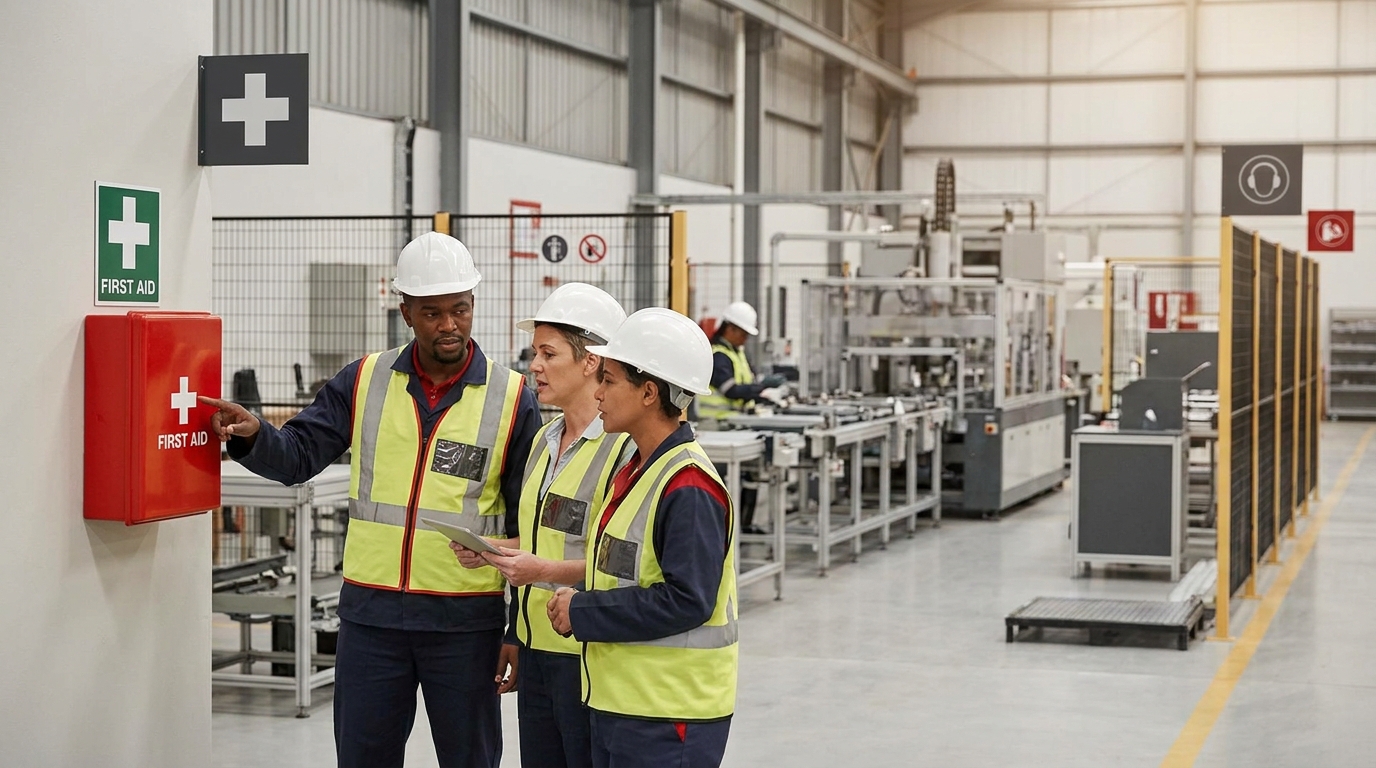
There are three levels of occupational first aid training in South Africa (for a full breakdown, see our guide to Understanding first aid levels in South Africa). Here’s an overview of first aid levels:
Basic First Aid (Level 1)
Basic First Aid (Level 1) covers CPR, choking, bleeding, basic wound care, fractures, burns, and more. Basic First Aid (Level 1) is an excellent and sufficient first aid course for all workplaces, including manufacturing. However, the higher risk of injuries in some manufacturing settings make Intermediate and Advanced first aid courses highly recommended options.
Intermediate First Aid (Level 2)
Intermediate First Aid (Level 2) covers everything included in Basic First Aid (Level 1), as well as additional content including first aid for injuries to the head, spine, chest, abdominal area, and pelvis, and first aid for drowning. This first aid course is an excellent choice for First Aiders working in a manufacturing environment.
Advanced First Aid (Level 3)
Advanced First Aid (Level 3) is recommended for heavy industrial and hazardous manufacturing environments. It covers all content included in Basic and Intermediate first aid courses, as well as additional content including mental ill health, hazard and risk assessment, blood pressure reading, haemoglucose testing, oxygen administration, and emergency childbirth.
Remember that first aid certificates carry a three-year validity period, after which time the First Aider needs to repeat training. At this point, we always recommend that your First Aiders upskill to a higher first aid course instead of simply repeating the same level again.
OHS hazards in manufacturing that make first aid training non-negotiable
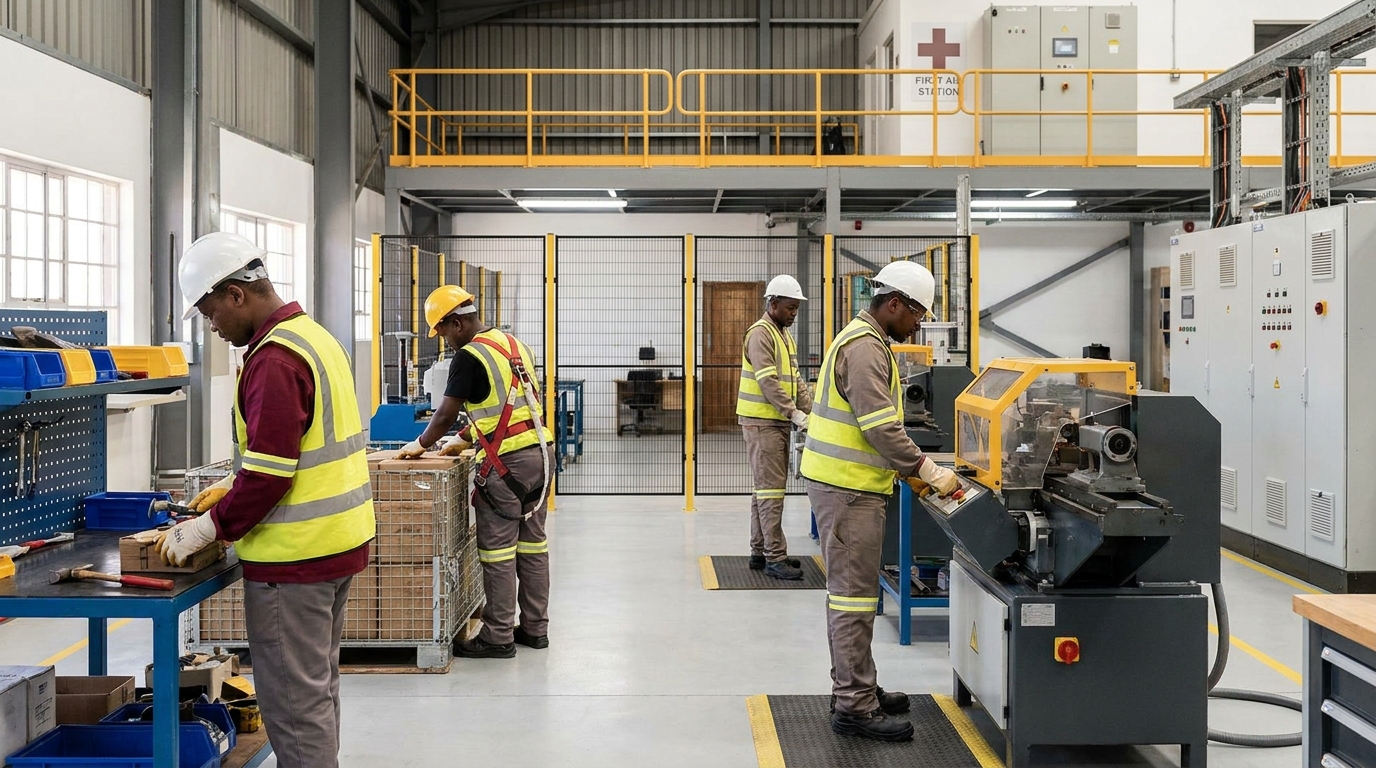
First Aiders in a manufacturing or factory environment may need to be ready to manage crush injuries, lacerations, chemical burns, falls from height, and electric shock. For a broader look at what your team could face, our article on the Top 10 Workplace Hazards is worth reading.
Remember, ensuring that your employees have access to first aid treatment while at work is not only a moral duty, it is a key compliance requirement of the OHS Act.
First aid kits in manufacturing environments
A well-trained First Aider without the right equipment and supplies is limited in what they can do. The OHS Act provides a clear list of required items that need to be in a regulation first aid kit. For a practical guide to what should be in your kit, see The Essential Components of a Workplace First Aid Kit. One of a First Aider’s duties is performing regular checks of the first aid kits and restocking any used up or expired items.
Getting your team trained: What to look for in a provider
Any provider delivering first aid courses for the workplace in South Africa must be accredited by the QCTO or HWSETA and be approved by the Department of Employment and Labour (DoEL). A certificate from a non-accredited provider does not satisfy your legal obligation, and it will not hold up under scrutiny during a DoEL inspection.
Beyond accreditation, look for a provider that offers practical, hands-on training. Online-only first aid courses with no in-person, practical exposure are not sufficient. First Aiders must have the opportunity to practise CPR, AED use, splinting fractures, controlling bleeding, putting a casualty into the recovery position, and other vital first aid skills in the presence of an experienced first aid instructor.
Some providers can come to your venue and train your team on-site. This can minimise the operational disruption of getting your team trained, particularly if you are located outside of major cities.
Finally, keep in mind that first aid certificates must be renewed every three years. Skills degrade without practice, and a lapsed certificate does not meet your legal compliance obligations.
First aid training for manufacturing is about protecting your people and complying with the OHS Act
The legal requirements around first aid training that manufacturing operations must meet are clear and enforceable. But the reason those requirements exist is straightforward: When an incident occurs on the floor, the minutes before emergency services arrive are critical. A trained First Aider can control bleeding or administer CPR before the damage becomes irreversible.
Browse our first aid courses to identify the right fit for your facility and risk profile. If you require guidance on which level or format suits your operation, contact us. We’ll be happy to talk you through your options.