
How the recovery position saves lives

The recovery position is one of the most important techniques taught in any first aid course, and knowing exactly when and how to use it can save a casualty’s life. This guide covers key information about the recovery position: What it is, how to open a casualty’s airway correctly, the step-by-step technique, and the critical […]
First aid training accreditation in South Africa: What employers need to know
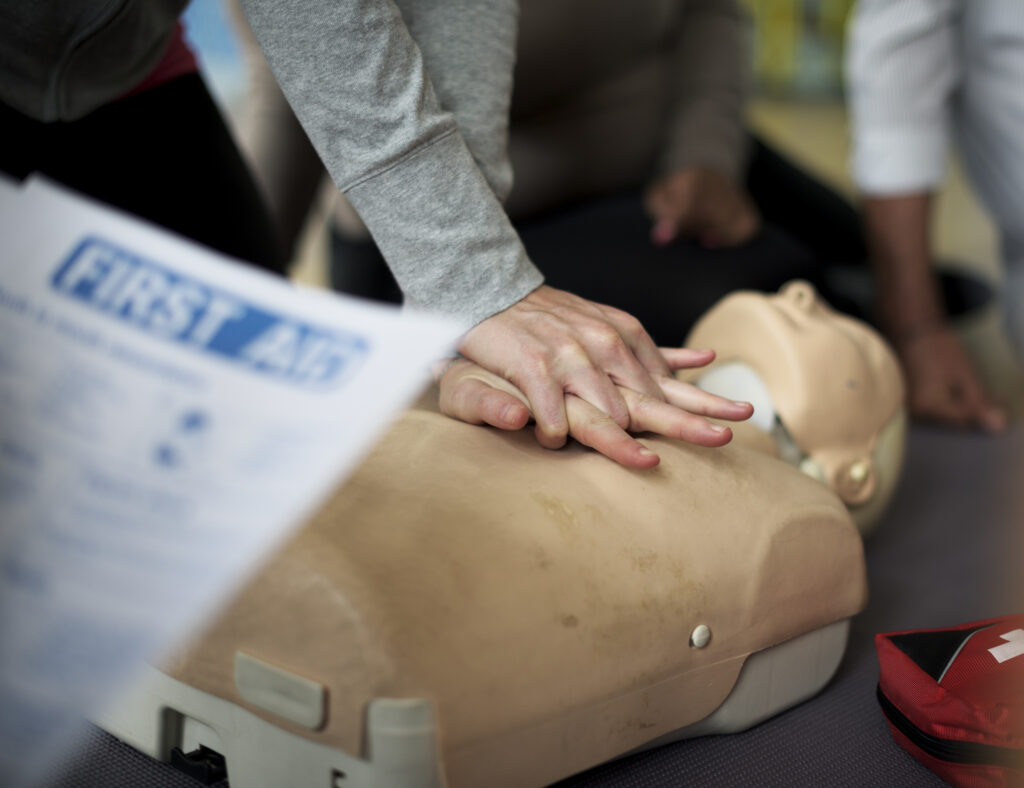
When it comes to workplace health and safety, first aid training is not optional. In fact, according to the Occupational Health and Safety (OHS) Act 85 of 1993, any workplace employing more than 10 people is legally required to have at least one certified First Aider available during normal working hours. For employers, understanding first […]
Heat stroke: Symptoms, prevention, and treatment

Heat stroke is one of the most serious forms of heat-related illness. It occurs when the body’s temperature regulation system fails and core body temperature rises to dangerous levels. This can happen during hot weather, prolonged sun exposure, or vigorous physical activity in very warm conditions. Heat stroke is a medical emergency. Recognising the signs […]
How to recognise the signs and symptoms of shock – and how to treat it

Circulatory shock is a life-threatening medical emergency. As a First Aider, it’s important to be able to recognise the signs and symptoms of shock. These can include a fast heart rate (in the early stages of shock) or a slow heart rate (in the late stages of shock), sweating, cold skin, dry mouth, aggressive behaviour, […]
Understanding first aid levels in South Africa

Historically, there have been three main first aid levels available in South Africa: First Aid Level 1, First Aid Level 2, and First Aid Level 3. The ‘level’ of each of these first aid certificates refers to the corresponding NQF (National Qualifications Framework) level assigned to that course. As such, ‘First Aid Level 1’ is […]
Quick guide: How to apply a first aid dressing

Knowing how to apply a first aid dressing correctly is an essential skill that is taught in first aid courses. Properly dressing and bandaging a wound helps to control bleeding, absorb blood and discharge, and protect the wound from infection. What is a first aid dressing? A first aid dressing is a sterile, absorbent pad […]
First Aid Concussion Treatment

Whenever a concussion is suspected, it’s important to have the casualty assessed by a medical professional to rule out a more serious head injury or spinal injury. The first aid treatment for concussion includes carrying out the Primary and Secondary Survey, monitoring the casualty for worsening symptoms, and stabilising the head and neck until professional […]
What should a car first aid kit contain?

In general, a car first aid kit should contain the same essential first aid supplies found in a Regulation 3 first aid kit, but can include some additional items designed to help you deal with common travelling ailments, like anti-nausea medication, eye drops, painkillers, and antihistamines. Unfortunately, road accidents are a common occurrence in South […]
Essential first aid skills you’ll learn in a first aid course
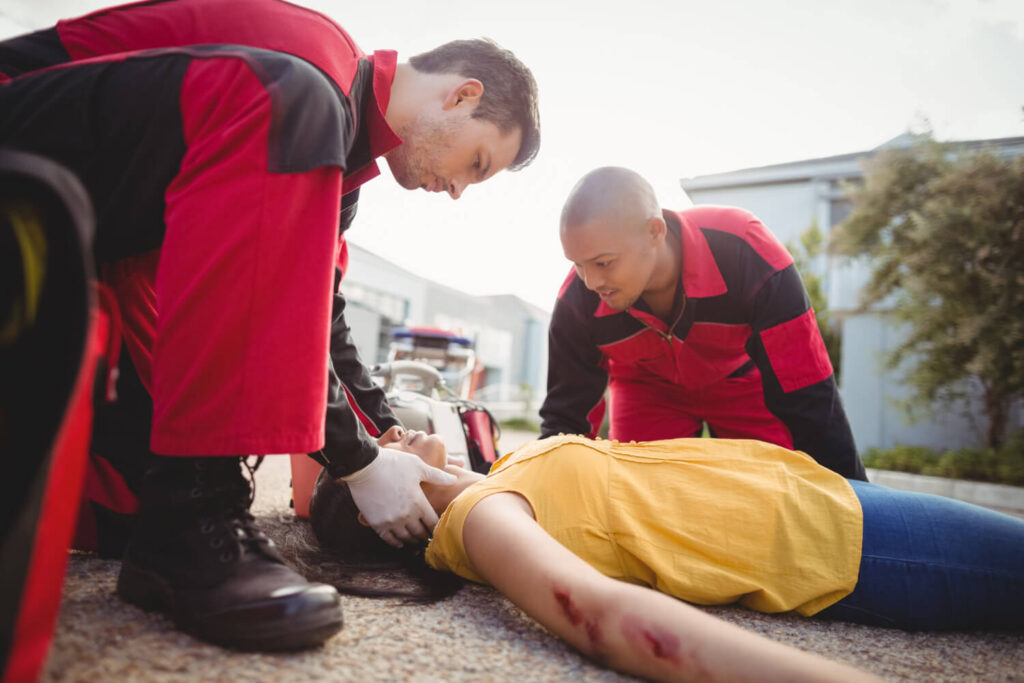
Key skills you’ll learn in a First Aid NQF Level 1 course include CPR and AED use, bleeding control, choking treatment, and how to treat burns, wounds, fractures, sprains, strains, poisoning, insect bites and stings, and shock. You’ll also learn how to treat medical emergencies like heart attacks, strokes, seizures, and diabetic episodes. Triage, scene […]
How to use an AED with CPR
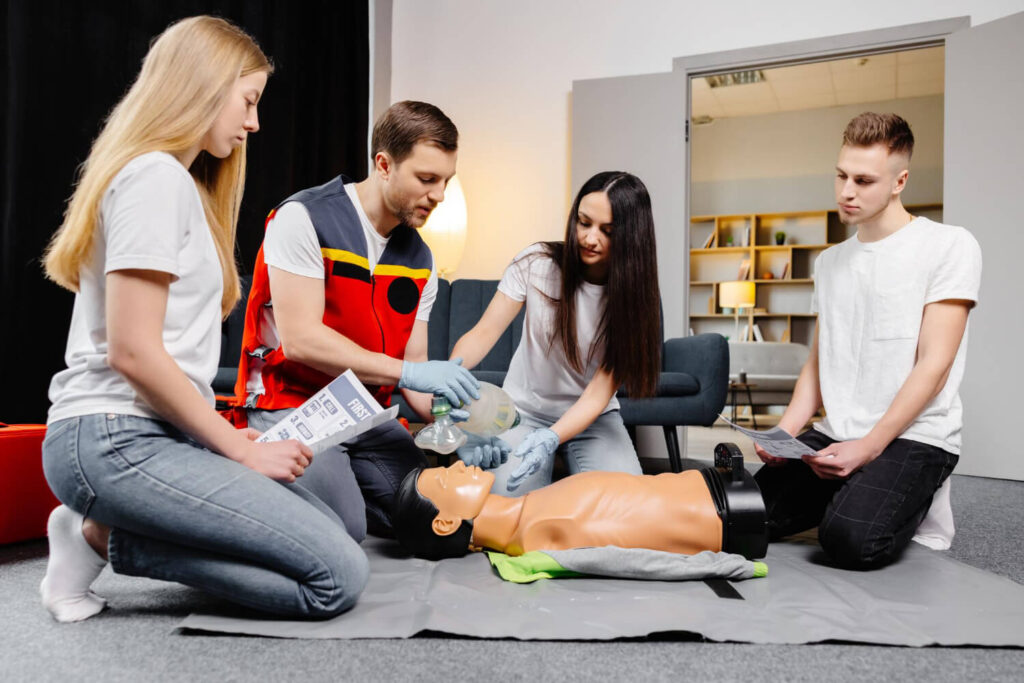
In this article, we’ll explain what an Automated External Defibrillator (AED) is, how it works, and how to use one alongside cardiopulmonary resuscitation (CPR) to give casualties the best chances of survival and recovery. What is an AED? AED stands for ‘Automated External Defibrillator’. It is a portable, life-saving device that is used to restore […]