
CEO Legal Duties for Employee Safety in South Africa
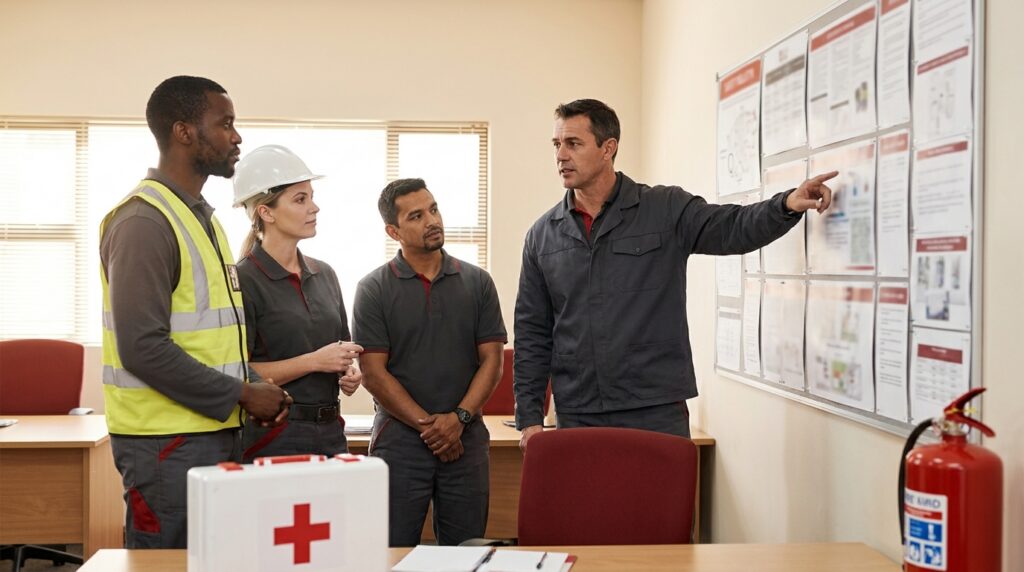
South African law places direct, personal legal responsibility for workplace safety on the CEO. This article breaks down Section 8 and Section 16 of the OHS Act, explains criminal liability under Section 37, and provides a practical compliance checklist for decision-makers.
Why HR Managers Are Responsible for First Aid Compliance

Most HR managers know first aid compliance sits somewhere on their to-do list. Fewer realise they carry personal legal exposure when it falls short. This post breaks down exactly what the OHS Act requires, what happens when those requirements aren’t met, and the practical steps that keep your organisation audit-ready.
Workplace emergency procedures 101: What employers need to know

An emergency can interrupt an ordinary working day without warning. A fire, chemical spill, medical emergency, or flood can threaten people’s safety and disrupt business operations. Clear workplace emergency procedures help everyone understand what to do when immediate action is needed. For employers, preparation means developing a plan, assigning responsibilities, training employees, and practising the […]
Guide to selecting health and safety management courses in South Africa

In South Africa, the Occupational Health and Safety Act 85 of 1993 (OHS Act) places strict legal obligations on employers to maintain a work environment that is free of risks to employees’ health and safety. This means that all employers must implement an effective health and safety management system in the workplace. One of the […]
How the recovery position saves lives

The recovery position is one of the most important techniques taught in any first aid course, and knowing exactly when and how to use it can save a casualty’s life. This guide covers key information about the recovery position: What it is, how to open a casualty’s airway correctly, the step-by-step technique, and the critical […]
What are the penalties for non-compliance with the Ergonomics Regulations of the OHS Act?

The Ergonomics Regulations, introduced under the Occupational Health and Safety (OHS) Act 85 of 1993, place a legal duty on employers to identify and manage ergonomic risks in the workplace. Failing to meet these responsibilities can have serious consequences, making it essential for employers to understand the penalties for non-compliance and the steps required to […]
How the Hierarchy of Controls can help employers meet the requirements of the OHS Act (“OSHA”)

In South Africa, the legislation governing workplace health and safety is the Occupational Health and Safety Act 85 of 1993, formally abbreviated as the OHS Act, and sometimes referred to informally as ‘OSHA’ or the ‘OSH Act’. Whichever shorthand you use, every employer in the country has a legal duty to meet the requirements of […]
Ensuring workplace safety with the OHS Act: A practical guide for South African employers

The Occupational Health and Safety Act 85 of 1993 (OHS Act) is the legal foundation of every employer’s obligation to protect the people who work for them. Yet for many South African businesses, the OHS Act remains a document they know they should understand but have never fully translated into day-to-day practice. This guide focuses […]
Your guide to choosing the right course for Health & Safety Officers in South Africa

If you’ve decided to pursue a career in occupational health and safety, the first question you’re likely to ask is, which course do I actually need? With dozens of health and safety training options available across South Africa, from short skills programmes to multi-month diplomas, knowing where to start can feel overwhelming. This guide cuts […]
Legal liability training for corporates in South Africa

In South Africa, both employers and employees carry clear legal responsibilities under the Occupational Health and Safety (OHS) Act 85 of 1993. When an incident or accident happens at work and it is found that any person has contravened the Act or failed to comply with their legal duties, that person – whether they’re the […]