
If you manage HR in a South African workplace, understanding first aid compliance is vitally important. The Occupational Health and Safety (OHS) Act 85 of 1993 places clear obligations on employers to ensure that first aid treatment is available to employees. HR plays an important role in supporting OHS Act compliance by coordinating appointment letters, training records, and certification tracking alongside the appointed Health and Safety Team.
Is first aid compliance HR’s responsibility?

First aid compliance can fall within HR’s remit because HR helps manage the people, records, and processes that support it. Overall responsibility remains with the employer, while HR’s specific duties depend on the organisation’s allocation of responsibilities.
HR sits at the intersection of people, policy, and compliance. You may manage the employment records, appointment letters, training schedules, and onboarding processes. This puts you in a position to notice when a trained First Aider resigns and a replacement needs training, or when certificate renewals have slipped through the cracks. Even in organisations where a dedicated Health & Safety Officer exists, HR can help maintain the administrative processes that support first aid compliance.
The OHS Act places a clear duty on employers to maintain, as far as is reasonably practicable, a safe working environment, and first aid provision forms part of that duty. The General Safety Regulations published under the Act set requirements for first aid provision, including trained First Aiders and stocked, accessible first aid boxes where applicable.
What the OHS Act requires
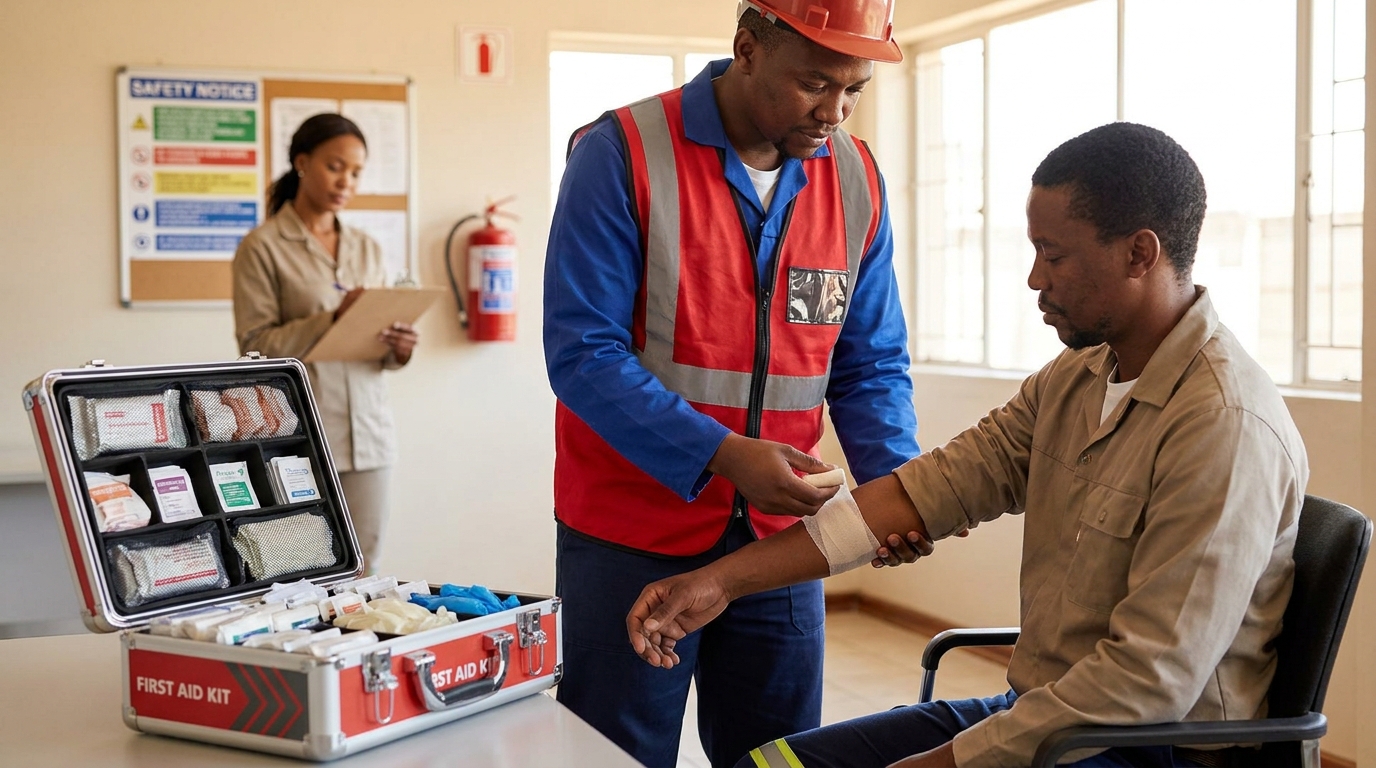
The General Safety Regulations set out specific first aid requirements for employers. Key areas include trained and designated First Aiders and properly stocked first aid kits, with requirements depending on employee numbers and workplace circumstances. Employers should also maintain written appointments and training records to demonstrate compliance.
Workplaces employing more than 10 employees must have certified First Aiders available during normal working hours. The ratio of First Aiders to employees depends on your workplace type. In shops and offices, the requirement is at least one designated First Aider per group of 100 employees or part thereof. In all other environments, including manufacturing, warehousing, and construction sites, the requirement is at least one designated First Aider per group of 50 employees or part thereof. Higher-risk environments may need additional First Aiders, and training should be appropriate to the risks identified in the workplace.
A designated First Aider must hold a valid certificate from an accredited training provider approved by the Chief Inspector of the Department of Employment and Labour (DoEL). Those certificates are valid for three years, and training must be renewed before the certificate expires to maintain compliance. The first aid training requirements under the OHS Act are specific: Training must meet the standards set by the Department of Employment and Labour. Informal or unaccredited training does not satisfy this obligation.
Each workplace employing more than five employees must have a first aid box or boxes that meet the minimum contents prescribed under Regulation 3. The kits must be accessible, clearly marked, and maintained in a state of readiness. A full list of Regulation 3 first aid kit contents should be used to check first aid kit contents on a regular basis.
What first aid compliance looks like day to day
One of the most important compliance details to get right is your numbers. As explained above, the number of trained First Aiders you’re legally required to have depends on how many employees you have and your workplace type.
Ensure that you keep track of first aid certificate expiry dates. If you’re not actively tracking them, you risk finding yourself in a situation where your appointed First Aider’s certificate has lapsed, leaving you legally exposed due to non-compliance with the OHS Act. Building expiry dates into your HR calendar, ideally with a generous lead time for booking training, is a good strategy.
Coordinate training to take place before certificate expiry, not after. Renewal (or upskilling) training needs to be scheduled with enough lead time to account for course availability and operational constraints. Book first aid courses early, rather than scrambling for a suitable date at the last minute.
Finally, make sure your first aid coverage extends across all shifts and work areas. A First Aider who works Monday to Friday, nine to five, doesn’t cover your Saturday warehouse team. The law is clear that a certified First Aider must always be available during working hours.
What a designated First Aider is responsible for
Part of managing first aid compliance well is understanding what you’re appointing people to do. A designated First Aider carries important responsibilities that support workplace compliance, and those responsibilities need to be reflected in their written appointment letter.
In broad terms, a designated First Aider is responsible for providing immediate assistance in the event of injury or sudden illness, maintaining and monitoring the first aid kit assigned to their area, and completing a record of incidents in which first aid is administered. For a detailed breakdown, find out what a First Aider’s responsibilities are here. First Aiders should understand the requirements and functions of the role before they accept it.
From an HR perspective, this also means that when a designated First Aider leaves the business or changes roles, their replacement needs to be identified, trained, certified, and formally appointed before a gap opens. Managing this proactively, rather than reactively, is one of the clearest markers of a well-run compliance function.
The importance of record keeping for first aid compliance
A DoEL inspector conducting an inspection will want to see documentation that proves first aid compliance. The documents and records you need to have on hand are training logs, first aid training certificates, written appointment letters for each First Aider, first aid kit inspection records, and incident reports.
Training logs should capture who was trained, when, by which accredited provider, and what level of certification they received. First aid training certificates must show the provider’s CI number to show that they are approved by the DoEL. First aid kit inspection records demonstrate that you’re maintaining equipment as required, not just purchasing it once and forgetting about it. Keep a record of first aid administered, and complete incident reports as required.
A practical compliance checklist for HR Managers
Use this as a starting point for reviewing where your organisation currently stands with regards to first aid compliance:
- Confirm the correct number of designated First Aiders for your employee headcount and workplace type
- Check that all First Aider certificates are current and note their expiry dates
- Schedule renewal training before any certificate expires
- Verify that written appointment letters exist for every designated First Aider
- Confirm that first aid coverage extends to all shifts and physical work areas, not just head office hours
- Audit each first aid kit against the Regulation 3 prescribed contents list
- Set up a regular kit inspection schedule with signed checklists kept on record
- Maintain a training register that records provider, certification level, and date for every trained employee
- Keep a record of first aid administered and ensure First Aiders understand their role in assisting with incident reports and records
- Review your process for replacing a First Aider who resigns or changes roles
Why first aid in the workplace matters beyond legal compliance
First aid is important for reasons well beyond compliance with the OHS Act. When someone is injured or suddenly becomes ill, a trained First Aider can provide immediate help while professional medical assistance is on the way. Investing in training, maintaining your equipment, and keeping your team prepared can help reduce the severity of injuries and save lives. It also shows employees that their safety and wellbeing matter to management, encouraging a more motivated, productive workforce.
First aid compliance doesn’t need to be complicated, but it does need to be done properly. Working with an accredited training provider takes most of the complexity off your desk: Qualified trainers, nationally recognised certification, and documentation that holds up when it needs to. First Aid, Fire and Safety Training delivers accredited first aid courses and all training meets OHS Act and Department of Employment and Labour requirements. If you’d like to talk through where your organisation currently stands or explore training options, get in touch with us and we’ll help you figure out exactly what you need.