
Department of Employment and Labour inspectors visit workplaces – with or without prior notice – to assess whether employers are meeting their obligations under the Occupational Health and Safety Act 85 of 1993 (the OHS Act). Understanding their powers, the areas they may examine, and the documentation you need helps you prepare and identify compliance gaps before a visit.
What triggers a DoEL health and safety inspection in South Africa?
An employee can report unresolved health and safety concerns to the DoEL or one of its inspectors. Serious workplace incidents can also lead to investigations.
An inspector may arrive announced or unannounced. Inspectors have the authority to enter workplaces at reasonable times without prior warning. Your compliance documentation should therefore be ready at all times, not just when you expect a visit.
What the inspector may examine

A DoEL health and safety inspection may include examining workplace conditions, reviewing documents, and questioning employees. Knowing which areas may be assessed helps you prepare and cooperate fully.
Workplace conditions
Inspectors have the authority to inspect machinery, equipment, substances, and workplace conditions. Your own preparation should include checking emergency exit clearance, fire extinguisher servicing records and physical condition, machinery safety, and whether workers have and use appropriate personal protective equipment (PPE).
A blocked emergency exit, an out-of-date fire extinguisher service label, or a first aid kit that has been used and never restocked can indicate gaps in your health and safety compliance status. Other areas to review include housekeeping, emergency preparedness signage, first aid kit location and contents, storage of hazardous substances, safety data sheet availability, and general working conditions, including illumination and ventilation.
Document review
Inspectors may request your health and safety file, risk assessments, training records, and relevant equipment maintenance records. Required workplace posters, including the OHS Act and Basic Conditions of Employment Act summary, should be displayed where employees can see them.
Keep the following documents current and available, as applicable to your workplace:
- The health and safety policy, signed by management and communicated to employees
- Appointment letters, including a Section 16(2) appointment where duties have been delegated, Health and Safety Representatives, and First Aiders
- Health and safety committee minutes, where a committee is required, showing that meetings have been held at least every three months
- Risk assessments and hazard identification records (HIRA)
- Safe work procedures relevant to the hazards present in the workplace
- Training records and certificates for First Aiders, Fire Wardes, Health and Safety Representatives, and other required competencies
- First aid kit inspection records, showing that kits are stocked and maintained
- Incident and accident records, including relevant COID Act reporting documentation
- Machinery and equipment maintenance records where applicable
- Emergency evacuation plans and procedures and records of evacuation drills
- Relevant Compensation Fund documentation, including a Letter of Good Standing where applicable
Training certificates deserve particular attention. Ensure that certificates are within their validity period and confirm that the provider holds the appropriate accreditation for the training delivered. First aid training providers must also be approved by the Department of Employment and Labour. Always confirming these credentials before you book a course.
Employee questions
Inspectors are entitled to question employees. Employees should understand the health and safety procedures relevant to their work, including where first aid equipment is kept, who their designated Health and Safety Reps are, and how to report incidents.
Findings and enforcement
Employers must cooperate with inspectors and address identified non-compliance. Inspectors may issue one of three types of notice:
- Improvement Notice: where health and safety measures are inadequate.
- Contravention Notice: where an employer has contravened the OHS Act or a regulation.
- Prohibition Notice: where a situation presents immediate danger and the dangerous activity must stop immediately.
Compliance gaps to address before an inspection
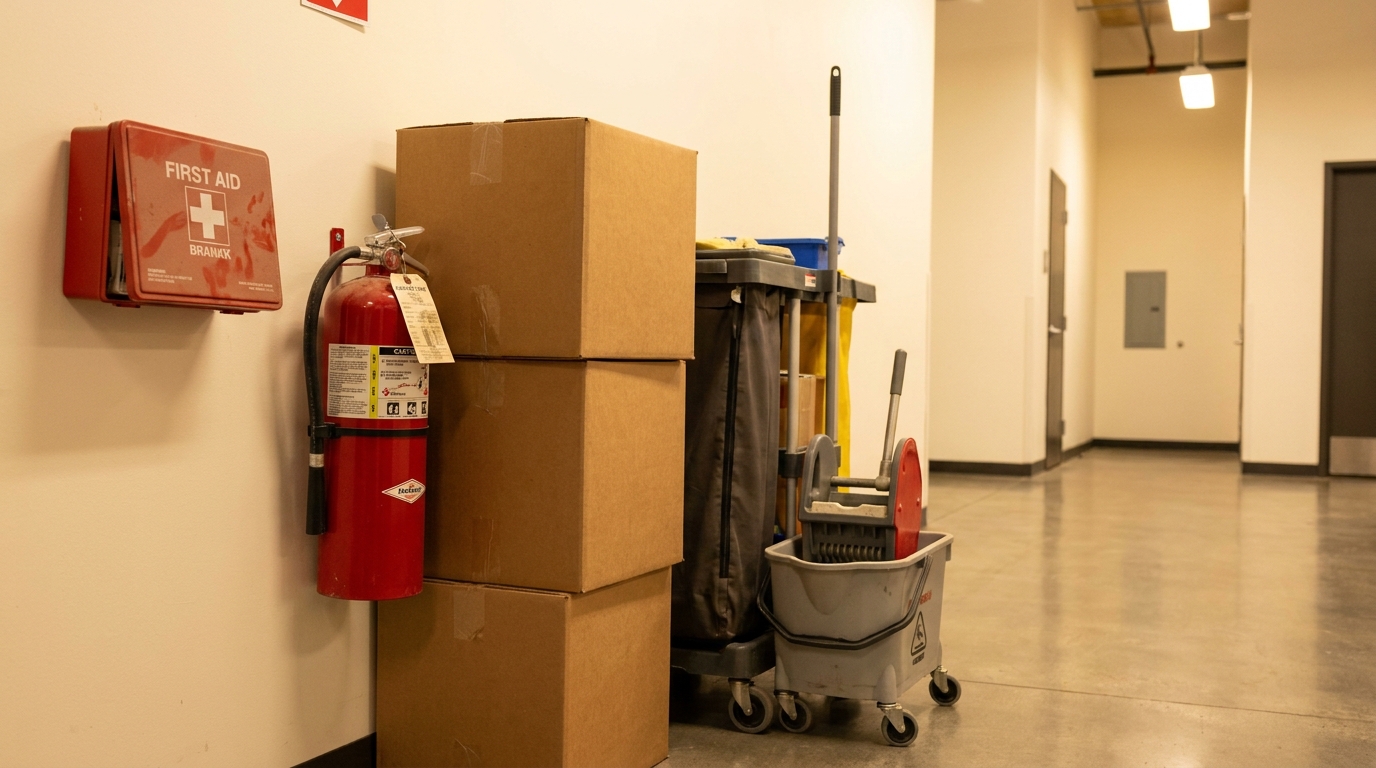
The following gaps can leave your organisation unable to demonstrate that its health and safety arrangements are in place and functioning.
Missing or lapsed first aid certificates
Where more than 10 employees are employed, the required number of trained First Aiders depends on employee numbers and workplace type, with additional coverage where workplace risks require it. Certified First Aiders must be available during working hours.
First Aiders must hold valid certificates from appropriately accredited, DoEL-approved providers. Expired certificates or training that does not meet these requirements can leave gaps in your compliance.
Incomplete or non-existent health and safety files
Many employers have some documentation, but not a complete and current health and safety file. Risk assessments that have never been reviewed, committee minutes that stopped three years ago, and appointment letters for people who have left the company all need attention.
Untrained Health and Safety Representatives
Health and Safety Representatives should be nominated and elected by employees as per the process laid out by the OHS Act, formally appointed, and properly trained to perform their duties.
No evidence of emergency preparedness measures
An evacuation plan on paper is not enough. Your records should show that evacuation drills have been conducted twice a year, employees should know the assembly point and evacuation procedures, and designated health and safety team members should be trained to manage an evacuation.
Your pre-inspection preparation checklist
Use this checklist as a practical starting point. It is not exhaustive, as specific industries carry additional requirements.
- Signed and dated health and safety policy, reviewed within the last 12 months
- Section 16(2) appointment letter in place where the CEO has delegated these duties
- Health and Safety Representatives properly nominated, elected, and trained, with appointment letters on file, where required
- Health and Safety Committee constituted where two or more Health and Safety Representatives are appointed, with records of meetings held at least every three months
- Current risk assessments covering significant workplace hazards
- Valid, accredited first aid certificates for the required number of First Aiders
- First aid coverage across working hours and shifts
- First aid kit inspection records showing regular checks and restocking, including checks after use
- Training records for firefighting, evacuation, and other required competencies
- Written emergency evacuation procedure and records of at least two drills in the past 12 months
- Incident register up to date, with COID reporting documentation where applicable
- Hazardous substance information and safety data sheets accessible to employees who work with those substances
- Fire extinguisher service records current, with annual servicing by a SAQCC-registered technician
- Required safety signage in place and legible
What to do after a non-compliance finding
Take any notice the inspector serves seriously and follow its requirements and deadlines. Where a prohibition notice requires an unsafe activity to stop immediately, that instruction must be followed.
Address the identified gaps and keep your compliance documentation, including training certificates, appointment letters, risk assessments, and inspection records, current and available for inspection.
Gaps such as having no trained First Aiders where they are required or never having conducted a risk assessment need attention. Arrange the necessary training and assessments, implement the required risk controls, and keep records of completed actions.
Maintain your health and safety file and the systems it documents throughout the year. Compliance requires ongoing implementation, monitoring, and improvement, not simply collecting documents before an inspection.
For employers who want a thorough grounding in their obligations, our guide to 10 essential health and safety practices in the workplace is a useful reference for understanding the broader compliance picture alongside the inspection process.
Get your OHS compliance in order
OHS compliance is not a single checkbox. It spans every element of how your workplace identifies, manages, and responds to risk. Your preparation should cover your health and safety management system, hazard identification and risk assessments, fire safety provisions, PPE controls, emergency preparedness, and the training records that demonstrate your people are competent in their roles.
If your workplace has gaps in fire safety training, Health and Safety Representative training, emergency evacuation planning, or first aid certification, address them before an inspection exposes them.
Whether you need to upskill your Health and Safety Representatives, get Fire Wardens trained and certified, ensure your First Aiders hold valid accredited certificates, or build a broader health and safety training programme for your team, we’re here to help. Get in touch with First Aid, Fire and Safety Training to discuss the courses your workplace needs and arrange training for your team.